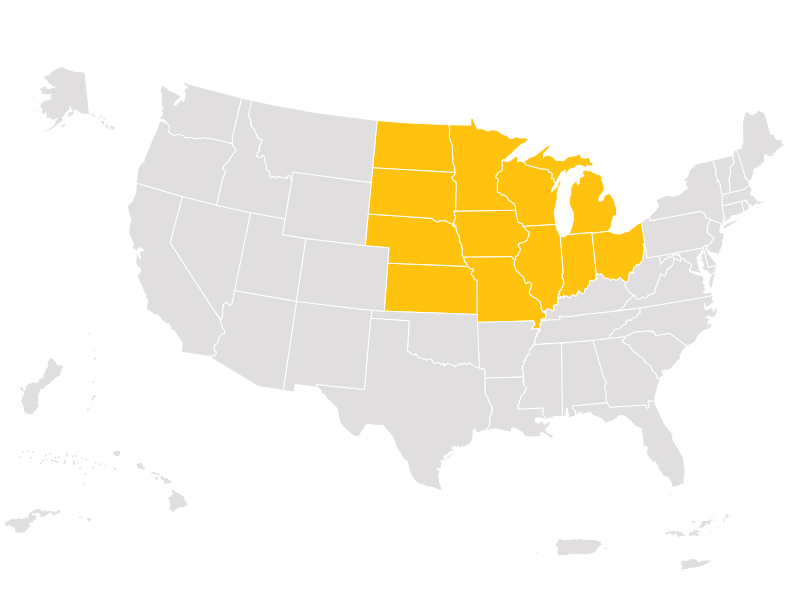
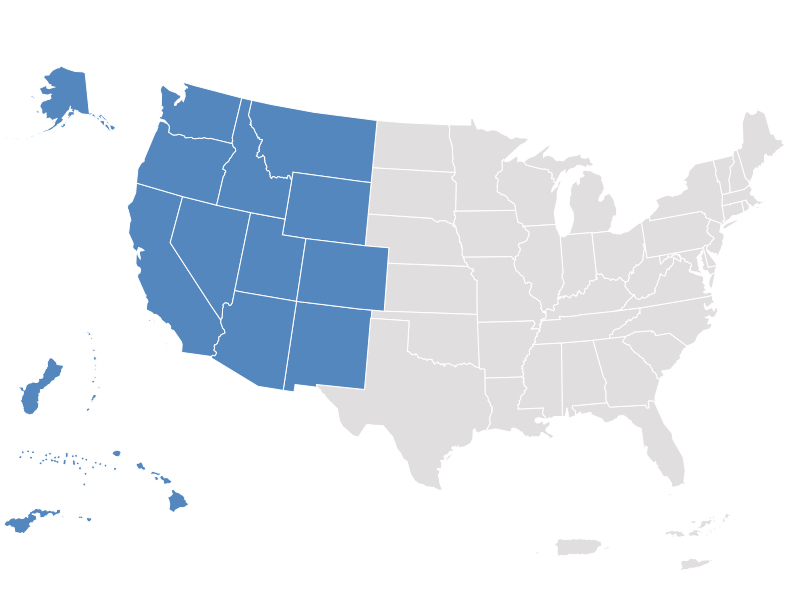
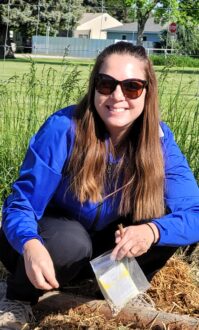
Ag Opportunities Volume 18, Number 10 October 2007 Grant funding program seeks innovative ideas for the farm and ranch The North Central Region Sustainable Agriculture Research and Education (NCR-SARE) Program is seeking innovative farmers or ranchers who want to implement a new, sustainable idea to improve their operation. NCR-SARE is currently accepting applications for their 2007 Farmer Rancher grant program. NCR-SARE awards grants to farmers and ranchers for on-farm research, demonstrations, and education projects. By providing funds ranging from $6,000 per individual grant to up to $18,000 for grants awarded to groups of three or more, NCR-SARE helps facilitate essential agricultural research and development. Beverly Pender is an urban farmer in Kansas City. Utilizing the lots she owns, and the lots donated to her from neighbors, she has been able to carry on Soul and Soil Rainbow Gardens. Thanks to NCR-SARE grant funding, she will be able to add on to her gardens, and local youth, seniors, and the homeless will also reap rewards. "Our objective is to promote urban farming and to teach the community about healthy food production," Pender explained. Pender’s grant is just one example of the wide range of projects that NCR-SARE has funded over the years. Other funded topics include pest and disease management, soil conservation, local marketing, public education, waste management, agri-tourism, crop diversity, aqua-culture, and many others. NCR-SARE grants are awarded based on the applicants ability to describe how their project will be sustainable in terms of having long-term profitability, being good for the environment, producing healthy foods, being socially responsible and supporting their community. Last year NCR-SARE funded 52 Farmer Rancher grants totaling $400,037. This year farmers and ranchers throughout the North Central Region will once again have the opportunity to apply for roughly $400,000 in grant assistance. The 12 states that comprise the North Central Region are Illinois, Indiana, Iowa, Kansas, Michigan, Minnesota, Missouri, Nebraska, North Dakota, Ohio, South Dakota, and Wisconsin. The NCR-SARE program receives its funding through the United States Department of Agriculture. Grant proposals are due in the NCR-SARE office by December 3, 2007. Interested applicants may contact Debi Kelly, MO State Sustainable Agriculture Co-coordinator at 573-882-1905 or KB Paul, MO State Sustainable Agriculture Co-coordinator at 573-681- 5584or paulk@lincolnu.edu. The current Farmer Rancher Grant Call for Proposals application can be found on the NCRSARE web site at http://ncr.sare.org/prod.htm. Previous project reports are made available through the national SARE web site at www.sare.org. Past Successful Farmer Rancher Grant Projects from 2006 1. Curt Alldredge, Platte City-"Dwarf Fruit Tree Management on Marginal Soils" 2. Walker Claridge & Assc, Fulton-"Heirloom Vegetable Productions Strategies to Improve Family Farm Income" 3. Bill Cites, Chaffee-"A Production and Marketing Assessment of Pacific White Shrimp in Rural Missouri" 4. Ellis Dieckhoff, Higginsville-"Transition of a Conventional Swine Operation to a Closed System, Freshwater Fish Operation" 5. John Kaiahua, Raytown-"Growing Tomato Pepper, Lettuce, and Spinach in Summer Under Shade Netting in Kansas City" 6. Dan Kuebler, Ashland-"Sustainable Solar Irrigation System" 7. Russell Kremer, Bonnots Mill-"Reducing and Eliminating the Reliance on Antibiotic Administration on Sustainable Hog Farms" 8. Jamie Root, Kansas City-"A Feasibility Study for a Sheep and Goat Market" 9. Ivan Stoilov, Dittmer-"Sustainable Fig Farm Using Renewable Solar and Geothermal Entergy" 10. Daniel West, Macon-"Phase II: Ethanol from Waste Fruit. 11. Ericka Wright, Kansas City-"Urban Agricultural Youth Program" ********************************************************************** Deworming Small Ruminants By Gene Schmitz, Livestock Specialist Meat goats and sheep are increasing in numbers in Central Missouri. Because of our climate, internal parasite control can be challenging. A limited number of deworming products combined with parasite resistance to some of these products is making parasite control in sheep and goats increasingly difficult. Below is some information compiled by Dr. Scott Greiner, Extension Sheep Specialist at Virginia Tech concerning deworming sheep and goats. Approved dewormers for use in sheep include Levamisole (Levasole and Tramisol), Ivermectin (Ivomec Sheep Drench), Albenazole (Valbazen), and the recently approved Moxidectin (Cydectin Sheep Drench). Keep in mind that all other products are currently not labeled for small ruminants, and must be prescribed and administered under veterinary direction. Following are a few tips for a successful sheep and goat deworming strategy. Reduce the number of deworming treatments and practice selective deworming, through strategies such as the FAMACHA system. Deworm only when necessary to prevent development of drug resistance, and deworm only those animals which warrant deworming. Cull highly susceptible sheep from the flock. Research has shown that a small percentage of the flock hosts the majority of the parasites, and these parasites shed the majority of the eggs. Use pasture management to enhance the effectiveness of a deworming program. The practice of “dose and move” can reduce the dependence on anthelmentic (dewormer) drugs to prevent and treat parasites by reducing the number of parasites animals are exposed to. Using the dose and move technique, animals are moved to a clean pasture after treatment. A clean pasture does not ensure that infective larvae are not present, but has infectivity low enough that susceptible animals do not become infected rapidly. A strategic deworming protocol must still be followed after moving the animals. Management intensive grazing systems can help reduce parasite infections. Lower stocking rates will reduce the intensity of the deworming program. Fewer livestock result in fewer shed worm eggs within a given area, thereby reducing parasite loads. This in turn may reduce the frequency of deworming, and help minimize developed resistance. Administer the proper dose. Be sure to estimate the weight of the animals accurately. Dose for the heaviest in the group, not the average. Dosages that are inadequate for the body weight of the animals are not only less effective on decreasing worm loads, but may also enhance parasite resistance to the drugs. Rotate dewormers annually. This means that if you used Ivermectin last year, switch to Levamisole this year. Rotating anthelmentics on an every other year basis will help prevent parasites from developing resistance to the product. When introducing new animals to the flock, deworm with products from two different drug classes (see Table 1). New animals should be isolated a minimum of 30 days prior to introduction. Mixing untreated animals with treated ones on the deworming program may destroy earlier efforts to minimize worm loads in the flock, and potentially introduce resistant worms. There are three major groups of drugs approved for deworming sheep and goats. These are listed in the table below. It is important to know which drugs are in each group, because once worms become resistant to one member of the group, they will be resistant to the other members of the group. |==========================================| | Table 1. Sheep and Goat Dewormers | |------------------------------------------| | Chemical | Class of | Trade | | Name | Drug | Name | -------------------------------------------| | Ivermectin | Macrolide | Ivomec | | Moxidectin | Macrolide | Cydectin | | Levamisole | Nicotinic | Tramisol | | Albendazole | Benzimi- | Valbasin | | | dazoles | | |==========================================| Additional information may be obtained at the Maryland Small Ruminant Page at www.sheepandgoat.com. What is FAMACHA? This is a program to help monitor parasite loads by examining the eyelids of the animals. Those animals with pale eyelids indicate parasite induced anemia. These animals should be immediately dewormed. Producers may obtain FAMACHA scoring cards by attending a training class. Contact your area livestock specialist for more information on this program. ********************************************************************** Chestnuts Roasting on an Open Fire There will be fall family fun at the fifth annual Missouri Chestnut Roast from 10 a.m. to 4 p.m. on Saturday, Oct. 13, at the University of Missouri Center for Agroforestry’s Horticulture and Agroforestry Research Center, New Franklin, Mo. Try fresh-roasted chestnuts; take a tour of the research farm; see MU Raptor Rehabilitation Project presentation; sample Missouri cheeses, wines and specialty products. Live music by Ironweed Bluegrass Band, cooking with chestnuts demonstrations, lunch of grilled elk, buffalo and beef products, children’s activities and beautiful scenery. Free admission; most activities in tents for comfort, rain or shine. Visit www.centerforagroforestry.org for schedule and directions. Please, no pets. ********************************************************************** National Small Farm Today Trade Show and Conference Nov 1-3, 2007 Boone County Fairgrounds Columbia, MO Fee: one day ticket $8, two day ticket $15, three day ticket $20 to attend seminars, Farmers Forum and trade show. Short Courses: $35/person for each or $120/person for all six Thurs, Nov 1 Hours: 9:00 am to 5:00 pm Short Courses 1. Fallow Ground to Pasture 2. Heaven with Mob Density Grazing  3. How We Keep Walking at Walk-About Acres: Diversified Farming, Marketing & Agritourism  Seminars Keynote address: Leadership—Get anyone to follow you anywhere  1. Fattening cattle, sheep & goats on grass  2. The amazing power of hoophouses  3. Diversified farming & direct marketing of pastured chickens, turkeys, pork, beef & lamb  4. Small, tight & profitable marketing  5. Legal aspects of direct marketing  Farmers Forum 1. Why Aronia Berries?  2. Producing Pacific White Shrimp  3. Farmstead Planning Principles  4. Raising Freshwater Shrimp  5. Raising Bait Fish  6. The Missouri Exchange Online Marketplace  7. Designing a Small-Scale Organic Portabella Mushroom Production System  8. Sustainable Solar Irrigation System  9. Chic Chic’s—An Urban Poultry Farm  10. Chestnuts: New Crop Opens New Markets  11. Are Walnuts Right for You? New Tool Helps You Decide  Friday, November 2, 2007 Hours: 8:00 am to 5:00 pm Short Courses 1. Year-Round Grazing for Cattle, Sheep & Goats  2. Honeybees  Seminars 1. Blue Skies & Bacon, Sows & Sunshine—Outdoor Hog Production  2. Farm Equipment  3. Angus: the Source of Tender Beef  4. Alternative Crops  5. Getting Started with Management Intensive Grazing  6. Possible Berries for the Midwest  7. Get Yourself a Farmer: Expanding Local Markets for Local Agriculture  Farmers Forum 1. Developing a Saskatoon Berry Market in the Upper Midwest  2. Integrated Nutrient Management by Using Hog Manure to Improve Soil Quality for Economic Hay Return  3. What Honeybees Mean to Small Farms  4. The Development of Procedures for Entering the Direct and Wholesale Markets with Value-Added Products  5. Update on Tropical Plants in Non-Tropical Environments  6. Mobile Slaughter Facility for Goats & Sheep  7. Dream of Wild Health: Indigenous Seed Project  8. Production Felt Making in the Small Carding Mill Setting  9. The Commercial Production & Marketing of Two High-Profit Added Value Products from Free-Range Chickens  10 Innovative Field to Market Processes for Small Produce Farms    Saturday, November 3, 2007 Hours: 8:00 am to 5:00 pm Short Courses 1. Year-Round Grazing for Cattle, Sheep & Goats (repeat)  2. Poultry 101 for the Small Farm  Seminars 1. Buy Fresh, Buy Local: Expanding a Consumer Campaign  2. Farm Equipment 3. Flame Weeders  4. Renewable Energy  5. Nutrition in Vegetables and Small Fruits  6. Getting Started with Management Intensive Grazing 7. Testing as a Niche Market  Farmers Forum 1. Agriculture Models for Urban & Periurban Environments  2. Pushing the Envelope with the Farmers’ Market  3. Alpaca Nature Day Camps  4. Finding the Right Market Niche: A Soup Marketing Story  5. Agricultural Services for Minority Farmers & Ranchers in Missouri and Beyond  6. Restoration of Traditional Anishinaabeg Agricultural Practices  7. Native Plants to Attract Beneficial Insects on Farms  8. Multispecies Pasture Stocking  For more information or to register by phone, call 800-633-2535. ********************************************************************** *** In Print/On-Line *** *Growing Local: Expanding the Western North Carolina Food and Farm Economy* is the culmination of a multi-year research project funded by the Southern Sustainable Agriculture Research and Education (SSARE) program. The research details: (1) what food and farm products are currently produced in the region; (2) how much of what is produced is also consumed in the region; (3) the potential for increasing local consumption of locally produced food and farm products as a way to strengthen the regional farm economy; and (4) where investment of resources and other actions could eliminate barriers currently impeding the purchase of local food. The report may be downloaded http://asapconnections.org/special/research/index.html *Artisan Cheese Production and Marketing* Video featuring provides information about start-up and development of a handcrafted cheese enterprise.  It highlights the importance and value of milk production practices, use of refurbished and adapted equipment, and a diversified marketing strategy.  It provides an overview of everything from cheese making regulations and techniques to financial accounting and business management. http://www.ssawg.org/virtualfarm.html#Video_8:_Artisan_Cheese_Production_an d *Agritourism: Health and Safety Guidelines for Children* This resource was written for agritourism operators large and small; and for long-term operations as well as farmers who might host a one-time event. The booklet includes tips and checklists to identify and reduce hazards found on farms, such as those relating to hayrides, corn mazes, pest control and hazardous weather.  The full-color, 37-page guidelines booklet was published by the National Children’s Center for Rural and Agricultural Health and Safety and funded by the National Institute for Occupational Safety and Health. The guidelines are available at http://www.marshfieldclinic.org/agritourism . If you would like a printed booklet, please contact the National Children’s Center at 1-800-662-6900, or if you have any specific questions, contact Tammy Ellis at ellis.tammy@mcrf.mfldclin.edu *Counties and Local Food Systems: Ensuring Healthy Foods, Nurturing Healthy Children* The National Association of Counties released a new “Best Practices” publication recognizing the important role farmers and other stakeholders involved in community agriculture play in ensuring access to healthy food and preventing youth obesity.  The publication profiles four methods that can be used to support local agricultural producers: food councils, farm-to-school, infrastructure for local farmers and agriculture conservation easements. http://www.naco.org/Template.cfm?Section=technical_assistance&template=/Con tentManagement/ContentDisplay.cfm&ContentID=24784 ********************************************************************** ***ON THE CALENDAR**** Oct 12-14—28th Annual Ozark Area Community Congress, Willow Springs, MO. Call 417-372-2479, www.ozarkareacommunitycongress.org Oct 13—5th Annual Chestnut Roast, New Franklin, MO. Call 573-882-3234. Oct 23-25—Grazing School, Bois d’ Arc, MO. Call 417-831-5246 x 3 Oct 29—From Recipe to Reality, Lincoln, NE. Call 402-472-2819 or jgifford1@unl.edu Nov 1-3—National Small Farm Today Conference and Trade Show, Columbia, MO. Call 800-633-2535. Nov 2-3—MO State Beekeepers Assn Fall Meeting, Hannibal, MO. www.mostatebeekeepers.org Nov 3—Putting Small Acreages to Work, Belleville, IL. Call 618-650-7050. Nov 5-6—MO Grassland Forage and Grassland Council Annual Meeting, Lake Ozark, MO. Nov 17—Small Farms Conference, Peoria, IL. Call 309-685-3140. Nov 29—Tri-State Local Foods Conference (MO, IL, IA), Quincy, IL. Call 217-223-8380. Nov 30-Dec 1—Livestock Symposium, Kirksville, MO. Dec 1—Rural Life Day, Jefferson City, MO. Call 573.635.9127 x 225. Jan 6-7—Governor’s Conference on Agriculture, St Louis, MO. Jan 7-8—Heart of American Grazing Conference, Columbia, MO. Jan 10-11—Great Plains Vegetable Conference, St Joseph, MO. Call Jan 19, Feb 23—Intensive Mini-school Series for Community Supported Agriculture (CSA), Kalamazoo, MI. Call 877-526-1441. Feb 2-4—Midwest Grape and Wine Conference, Tan-Tar-A. Call 1-800-392-WINE. Feb 15—Organic Marketing Workshop—Missouri Organics on the Move, Jefferson City, MO. Call Feb 16—MO Organic Assn Annual Conference and MO Farmers Market Assn Conference, Jefferson City, MO. Call Feb 18-19—Small Fruit and Vegetable Conference, Springfield, MO. Call Feb 22-25—Western Farm Show, Kansas City, MO. Feb 29—MO Assn of Meat Processors Convention and Trade Show, Columbia, MO. Call417-237-0410. March 25-27—SARE’s 20th Anniversary Conference: The New American Farm: Advancing the frontier of sustainable agriculture, Kansas City, MO. Contact outreach@sare.org April 1-3—National Extension Women in Agriculture Education Conference, Oklahoma City, OK. Call Lgw@udel.edu or 302-831-2538. University of Missouri Field Day Schedule Oct 4—Ag Sciences Day at Wurdack Farm, Cook Station, MO. Call 573-882-4450. Oct 13—Chestnut Roast at Horticulture and Agroforestry Research Center, New Franklin, MO. Call 573-882-3234. Green Hills Farm Project Farm Walks Green Hills Farm Project welcomes all families to our open farm walks.  Always bring your children!  Please call ahead to advise the host family of the number attending and to get directions.  The host family provides main meat course and drinks.  Please bring lawn chairs and covered dish. Come on out and join us for a great time of fellowship and sharing on our farms! October 20th - Saturday, 11am, Kerry & Barb Buchmayer, Purdin, MO 660.244.5858, Organic milk, butter, and eggs.  Learn about managing soil and animals organically at Green Hills Harvest.  Tours of the bottling plant available for those interested.  www.ghharvest.com or ghharvest@juno.com   November 15th - 4pm, Ben & Nancy Coleman, Callao, MO, 660.768.5743. Ben and family have been cattle ranching for years.  Come and see their management practices; come early since it will be getting dark soon at this meeting.  Heated outbuilding for meal and meeting.   December - no meeting in December