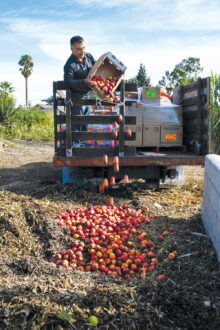
Ag Opportunities Volume 17, Number 11 November 2006 High Tunnels Extend Growing Season and Increase Profits By Sara Agnew Senior Information Specialist Extension and Ag Information Bob Lober's transformation from corporate management to farming didn't happen overnight. When he moved from St. Charles to a modest acreage outside Moscow Mills in 1989, the computer network manager was just looking for a way to escape the city and its urban lifestyle. The 54-year-old father of 12 didn't plan to be a farmer. But over the next few years the land worked its magic on Lober. In 1996, Lober cut back his hours and opened St. Isidore Farm. He started small, growing plots of vegetables and selling them at the St. Charles Farmer's Market. Eventually, Lober began selling vegetables direct to area restaurants. Two upscale restaurants specifically mentioned St. Isidore's baby beets on their menus. Despite his success, Lober still depended on part-time consulting work to make ends meet. Homemade high tunnels set him free. Now, the one-time corporate manager is a full-time organic farmer who in 2005 sold 25,000 pounds of fresh produce that he grew without using chemicals on about 1 1/3 acres. His gross sales totaled more than $60,000. Today, Lober grows exclusively for four upscale restaurants in the St. Charles area. Not bad for a one-family operation. "If I hadn't built the high tunnels, I couldn't have quit my part-time job because the high tunnels extended my growing season," Lober said. "I was able to make up for the money I lost quitting my job." High tunnels, or hoop houses as they are sometimes called, are unheated greenhouses that can help vegetable and fruit producers extend their growing season so they can improve the profitability of their farms. In late October, MU Extension Horticultural Specialist Jim Quinn took 25 growers from central Missouri on a tour of St. Isidore Farm to see how Lober has used homemade high tunnels and a commercially produced hoop house to lengthen the growing season of many of his most profitable vegetables. Participants also toured the Reckamp Farm in Wright City, Mo., where confinement hog producers David and Marylin Reckamp have diversified into vegetables and small fruits by using commercially produced high tunnels to capture an early market for their produce. Lober told visitors he uses his high tunnels throughout the year to assist in growing a wide variety of produce, including lettuce, Swiss chard, heirloom tomatoes, spinach, carrots, turnips, peppers and fall squash. His homemade hoop houses, which are crafted from thick plastic tarps and PVC pipes, can be broken down into two 50-foot long sections and moved in a couple hours with the help of his teenage sons. Eventually, however, Lober wants to replace the small hoop houses with larger, more permanent structures. "I won't have kids at home forever," he said. "I want to have something I can maintain myself." Lewis Jett, a state vegetable and crop specialist with Lincoln University in Jefferson City, said high tunnels not only lengthen the growing season for vegetable producers but protect the growing crop from extremes in temperature, strong winds, driving rain and destructive hail. High tunnels also protect crops from harmful insects and diseases that can lower marketable yield, he said. Another benefit of such unheated, plastic-covered greenhouses is they can be used to intercrop many vegetable specials. On a small plot of land, hoop houses permit intensive production of food crops, he said. In 2001, Jett conducted a study at the MU Bradford Research and Education Center to evaluate the yield performance of several tomato cultivars within a high tunnel and in the field. His study found that high tunnels significantly enhanced the yield of cultivar tomato. "For growers interested in early tomato production, high tunnels seem to be an excellent technology to achieve this goal," Jett wrote in his report about the study. "Almost every cultivar that performs well in the field environment will excel in a high tunnel. "Based on the result of this research," he concluded, "it is possible for a grower to have vine-ripe tomatoes from mid-June until October in the central Midwest by using high tunnels as a complement to field production." Lober couldn't agree more. He confirmed Jett's conclusion that the best size for hoop houses is 20 feet wide by 100 feet long by 9 to 14 feet tall. "What I've found is the bigger the high tunnel, the better the growing environment," Lober said. "The taller they are the longer it takes for them to heat up, but then they stay warm longer." The Reckamp Farm is a much larger operation than Lober's 13 ½-acre farm. The Reckamps have traditional row crops and a 150-sow farrow-to-finish hog operation on their 185-acre farm that they operate with David's parents, Gene and Marilyn. With subdivisions moving closer and closer, the Reckamps knew they had to diversify into something less smelly if they wanted to keep the farm. They settled on vegetables and small fruits. David Reckamp told visitors the key to success was finding a way to extend the growing season. In 2003, the couple put up a FarmTek high tunnel for $1,800. By the end of the year they had produced 8,000 pounds of tomatoes and earned enough money to pay for that hoop house and buy three more. That's not to say they haven't had problems. One year, a nasty downpour washed away a whole hoop house of tomato plants. Frustrated, but undaunted by the disaster, the couple raised the soil level in their high tunnels, and now there is a 6-inch step up from the ground outside. "We learn something new every year," Marilyn Reckamp said. "And we're still learning." Lober's advice to non-farmers venturing into the production and sale of vegetables is to start small, attend seminars and don't be afraid to make mistakes. "I've been doing this for 10 years, but the first three don't count because I didn't know what I was doing," Lober said. "It's a leap of faith. You have to have an attitude that you can do this." (Sources: Lewis Jett, 573-881-1966; Jim Quinn, 573-634-2824) Pictures of St. Isidore’s Farm - http://www.hightunnels.org/ForGrowers/GrowersUsing/StIsidoreFarm.htm For additional information on extending the growing season, visit the Missouri Alternatives Center’s website at: http://agebb.missouri.edu/mac/links Click on the letter "C" for cold beds and hot frames; "H" for high tunnels; "S" for season extenders ********************************************************************** Fall Best Time to Establish Trees from Walnuts Establishing your own black walnut trees starts with collecting walnuts during the fall. "Black walnuts should be hulled and washed as soon as you collect them," said Gaylord Moore, horticulture specialist, University of Missouri Extension. The next step is to eliminate nuts that may be poorly filled. "I suggest you place them in a container of water. Dispose of the nuts that float to the top. These floaters are poorly filled and will not germinate well," said Moore. Preparing a fine seedbed in the areas you intend to plant black walnut seeds is the next step. "Either plant them now or stratify the seed and plant them next spring," said Moore. Moore recommends planting three to five nuts, about two inches deep, at each tree location. "Be sure and mark the area where nuts are planted and to keep the area weed-free," said Moore. During the first year, select the strongest-growing tree and remove the others by cutting them off below the root collar. Other methods to establish walnut trees are by establishing a nursery area or growing trees in containers. For more information on this topic, contact your local University of Missouri Extension Center, and request the MU guide sheet, "Propagating Pecan and Black Walnut in Missouri" or see it on online at http://www.centerforagroforestry.org/pubs/proppecbw.pdf ********************************************************************** ***IN THE NEWS*** The MO Dept of Ag is now accepting applications from eligible livestock producers to assist with the recovery of forage production losses due to drought conditions in 2006.  The application period ends Fri, Nov 17, 2006.  Producers will not receive direct notification of the program or applications.  Applications are available online at www.mda.mo.gov or through eligible county Farm Service Agency offices and through qualifying University of Missouri Extension Offices. Eligible counties include Barry, Barton, Bates, Benton, Camden, Cass, Cedar, Christian, Cooper, Dade, Greene, Henry, Hickory, Jackson, Jasper, Johnson, Lafayette, Lawrence, McDonald, Miller, Moniteau, Morgan, Newton, Pettis, Polk, Ray, St. Clair, Saline, Stone and Vernon.  For more info, visit www.mda.mo.gov/drought/index.html In an effort to promote animal agriculture, the MO Dept of Ag is recommending that livestock producers enroll in the Environmental Quality Incentives Program - a voluntary conservation program promoting agricultural production and environmental quality.  For an application, visit www.mo.nrcs.usda.gov/programs/eqip/out/FY07%20Blank_EQIP_CCC1200.pdf Eligible producers may receive financial and technical assistance for agricultural land to implement structural and management conservation practices.  Applications must be submitted on or before Fri, Nov 17, 2006. For more info, contact your local Natural Resources Conservation Service (NRCS) office or the State NRCS office at 573-876-0900 or visit www.mo.nrcs.usda.gov/ Good news for vegetable farmers: Veggies may be good brain food. In a new study, The American Academy of Neurology says diets with about three servings of vegetables a day slowed cognitive decline of the brain by up to 40% in test subjects 65 years old and up. The Academy says a similar diet with fruit did not have the same effect. But much more research and testing will be done to confirm the findings. (Kiplinger Ag Newsletter, Vol 77 No 22) A team of researchers is working towards using Asian carp as feed for animals at the St. Louis Zoo. www.washingtonpost.com/wp-dyn/content/article/2006/09/19/AR2006091900566.html Ellen Dierenfeld, staff nutritionist at the zoo, hopes to begin a pilot feeding study with penguins, sea lions and pelicans by next spring. Other zoos may also participate, she said, and vitamins and mineral supplements could be added to the carp cake developed by University of Missouri-Columbia food scientist Andrew Clarke. The St. Louis Zoo, one of the nation's largest, annually buys more than 60 tons of fish for feed mostly species such as mackerel, herring and capelin. Prices range from 30 cents to 70 cents per pound, and zoo officials believe they could save money by feeding the carp to animals. Dierenfeld believes up to 25 percent of the fish feed could be replaced with carp. "This would help reduce pressures on marine fisheries and help solve the Asian carp problem," she said. More medical uses for grape seed extract? It's already hailed as a potent antioxidant, and it also shows promise in slowing the growth of prostate and skin cancers. Now, new research says grape seed extract shows promise in fighting high blood pressure and colorectal tumors, too. The extract has a protein, Cipl/p21, that inhibits cancer cell growth. Breakthroughs may spell more sales for vineyard operators. (Kiplinger Ag Newsletter, Vol 77 No 22) Pumpkins are coming in greater varieties now, delighting kids and adults, too. For example, breeders at Seminis vegetable seeds have produced a variety of very smooth pumpkins...much easier to draw on. They’re also breeding in traits such as darker colors and firmer stems. And a new variety, Snack Jack, features hull-less seeds for roasting. (Kiplinger Ag Newsletter, Vol 77 No 22) OMRI, the Organic Materials Review Institute, introduced a new online listing service for organic seeds. The OMRI Organic Seed Database will provide accurate information on the availability and supply of hundreds of certified organic seed varieties, to help growers and certifiers find supplies of organic seed. OMRI provides independent verification of organic certification for listed seeds, so seed suppliers are charged a fee for each seed variety listed per year.  http://seeds.omri.org/index.php  (Weekly Harvest Newsletter - Sept 20, 2006) A study shows organic grain is more profitable than conventional in Minnesota. It looks like Minnesota grain farmers could make more money by switching to organic grain crops. That's the conclusion of a four-year study announced this summer at the American Agricultural Economics Association's annual meeting. David W. Archer, an Agricultural Research Service (ARS) economist, and Hillarius Kludze, an ARS soil scientist, presented a paper describing the study. The study was unusual in that it analyzed both economic risks and transition effects of switching to organic farming. Archer and Kludze compared an organic corn-soybean rotation and an organic corn-soybean-spring wheat/alfalfa rotation--half grown with conventional tillage and half with strip tillage--with a corn-soybean rotation using conventional tillage. Strip tillage involves tilling only the middle of the seedbed. The scientists found that when strip tillage is used with organic farming, one of the transition risks is an increase in weeds until farmers learn to manage the system. A report on this study may be read on the web at: ars.usda.gov/SP2UserFiles/Place/36450000/Products-Reprints/2006/1338.pdf The Organic Food Program in Washington is proposing to raise organic certification fees, according to an Associated Press article in The Columbian. Rising demand for organic food is prompting more growers to seek organic certification, and certifiers say they are understaffed to complete the paperwork and inspections required for more certifications. While some small growers in particular are unhappy with the idea cost increases, many growers are turning to organic certification to meet market demand, so the workload for certifiers is likely to remain heavy. (Weekly Harvest Newsletter - Nov 1, 2006) ********************************************************************** ***IN PRINT/ON-LINE*** *Agriculture Factbook* a handy reference tool that offers information about US Agriculture and describes all USDA programs. It also provides useful information about food safety, nutrition, rural issues, research, education, and natural resources. Available at http://www.usda.gov/factbook/ The Farm Service Agency announced the introduction of the newly designed FSA, customer-focused, Web site at http://www.fsa.usda.gov. The redesigned Web site improves the delivery of information and services to Web site visitors and employees and meets USDA's eGovernment strategic goals prompted by the President's Management Agenda. A number of USDA agencies, in conjunction with other organizations in the public and private sectors, sponsored a symposium last fall to explore organic agriculture. The proceedings of the symposium, Organic Agriculture: Innovations in Organic Marketing, Technology, and Research, is now available through Crop Management, www.cropmanagement.org, an online journal of the Plant Management Network. The proceedings - www.plantmanagementnetwork.org/pub/cm/symposium/organics/ A total of 18 presentations across six themes are explored, including 1) challenges remaining in the organic sector, 2) producer options and obstacles, 3) market growth, 4) the training of farmers and other agricultural professionals, 5) measuring and communicating the benefits of organic farming, and 6) research. *Weed 'Em and Reap* These DVDs show growers and researchers explaining their innovative weeding systems as they use them in their fields in the Northwest, Montana, Virginia, and North Carolina. Part 1: Tools for non-chemical weed management in vegetable cropping systems. Part 2: Reduced tillage strategies for vegetable cropping systems. From the OSU Dept of Horticulture, Corvallis, OR. 541-737-3464, http://oregonstate.edu/dept/hort/faculty/stone/WeedEmandReap/ *Effect of Cover Crops for Weed Management in Organic Vegetables* Iowa State University. http://extension.agron.iastate.edu/organicag/researchreports/nk05peasbeans.pdf *The Farmers Guide to Agricultural Credit* This guide was written to help farmers understand agricultural finance, and to help them be better prepared for the credit application process.  It introduces some effective planning tools farmers can use to increase their opportunities in accessing capital.  Also offered are appendices containing resources for further learning. www.rafiusa.org/pubs/Farmer%27s%20Guide.pdf ********************************************************************** ***ON THE CALENDAR*** Nov 7-9-Shortleaf Pine Symposium: Restoration and Ecology in the Ozarks, Springfield, MO. Call 573-882-9909 x 3320. Nov 7, 14, 21, 28, Dec 5, 12-Annie’s Project, Kirksville, MO. Call 660-947-2705. Nov 10-CSA Mini-School, Cadillac, MO. Call 877-526-1441. Nov 10-12-CSA Conference, Cadillac, MI. Call 877-526-1441. Nov 10-12-17th Weavers & Spinner’s Guild, Columbia, MO. 636-479-5659, http://cwsg.missouri.org/events.html Nov 20, 27, Dec 4, 11-Golden Age Farming Class, Mexico, MO. Call 573-581-3231. Nov 28-Annie’s Project, Mound City, MO. Call 816-324-3147. Nov 30-Fence Laws Workshop, Various locations (Kirksville-660-785-2530, Princeton-660-748-3315, Albany-660-726-5610, Park Hills-573-518-2324, Camdenton-573-346-2644). Dec 1: Deadline-Farmer Rancher Grant Proposals. North Central Region SARE, 800-529-1342 ncrsare@unl.edu; www.sare.org/ncrsare/prod.htm Dec 1-2-MO Livestock Symposium, Kirksville, MO. Call 660-665-9866 or http://missourilivestock.com. Dec 2-Feeding Kansas City Conference, Kansas City, MO. Call 913-488-1270 or http://growinggrowers.org Dec 2-Rural Live Day 2006, Jefferson City, MO. Call 573-635-9127 x 225. Dec 6-7-A Recipe for Success: Organic Production and Consumer Driven Marketing for the Farmer Entrepreneur, Bloomington, IL. Call 217-333-1588 , aslan@uiuc.edu Dec 7-9-Acres USA Conference, St Paul, MN. 800-355-5313, info@acresusa.com, www.acresusa.com/events/events.htm Dec 8-9-US Freshwater Prawn & Shrimp Growers Assn, Nashville, TN. 662-390-3528 or usprawngrowers@yahoo.com Dec 10-11-MO Governor’s Conference on Agriculture, Lake Ozark, MO. Dec 10-13-3rd National Conference on Grazing Lands, St Louis, MO. Call 303-986-3309, www.glci.org/3NCGLindex.htm. Dec 15--Deadline-Organic Research Proposals. Organic Farming Research Foundation. 831-426-6606, jane@ofrf.org, www.ofrf.org/research/application.html Jan 9,16, 23-Farm & Small Business Estate Planning Workshop, Kirksville, MO. Call 660-947-2705. Jan 12-13-Landscape Design with Missouri in Mind, Springfield, MO. Call 573-522-4170. Jan 16-18-Mid-America Fruit Growers Meeting, Excelsior Springs, MO. Call 573-882-9632. Jan 19-20-American Heartland Aquaculture Conference, Whittington, IL www.moaa.pond.org Jan 25-28-Southern Sustainable Ag Working Group Conference, Louisville, KY. Call 678-494-0696, www.ssawg.org Jan 27-28-Beginning Beekeeping Class, Columbia, MO. Call 573-474-8837. Feb 3-4-MO Nut Growers Assn Evaluation & Show, Nevada, MO. Call 417-436-2351. Feb 3-5-Midwest Wine & Grape Conference, Tan-Tar-A, MO. Call 1-800-392-WINE. Feb 12-14-Missouri Small Fruit & Vegetable Conference, Springfield, MO.