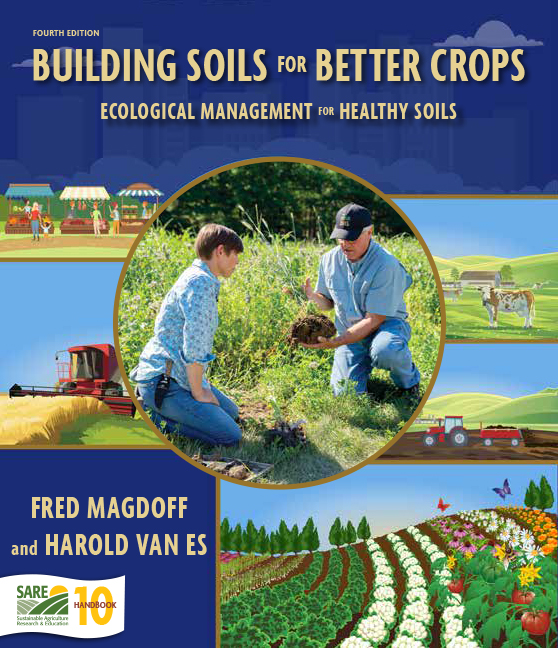
Missouri Alternatives Center's Bimonthly Electronic Newsletter 800-433-3704 "AG OPPORTUNITIES" Jan-Feb (Vol. 11, No 4) * Small Farms * New Family Farms * Agricultural Alternatives Missouri Hosts Annual Workshop for Advanced Organic Production Michael Fields' Advanced Organic Vegetable Production Workshop for Small and Large Scale Growers moves to Missouri this year. The intensive workshop will be held Wed through Fri, Feb 14-16, 2001, at the Rickman Center in Jefferson City. The Sustainable Agriculture Extension Program of the University of MO and Lincoln University, MO Organic Assn, Sustaining People through Agriculture Network, MO Dept of Ag, and MO Alternatives Center are all teaming up with Michael Fields to host the upcoming workshops. DeLisa Lewis, who operates Terra Bella farm in Auxvasse, MO, with her partner Holly Anderson, will join workshop veterans Richard DeWilde of Harmony Valley Farm, Viroqua, WI, and Dan Kaplan of Brookfield Farm in Amherst, MA, for the annual event's presentations. This workshop addresses what is needed to make organic vegetable farming a profitable, manageable, full-time career. The focus will be on the techniques these successful farmers have used to manage their farms profitably and efficiently in ways that fulfill their goals and maintain their values. Topics include soil fertility, weed control, irrigation, crop planning, and record keeping, labor, harvest, and post harvest handling, developing markets, pricing, and overall farm management. Lewis' farm is situated on prairie land along the Auxvasse Creek. The farm raises salad mix lettuces and greens, culinary and medicinal herbs, and cut flowers, in double-dug raised beds. The operation also produced compost on a large-scale and beef cattle using intensive grazing and biodynamic methods. It markets to restaurants and through the Columbia Area Farmers Market. Lewis is a graduate of UC-Davis and has 10 years of experience. The intensive workshop series has been held previously in WI, MN, and IA. Active vegetable growers who maintain and operate market and subscription gardens take part in planning, organizing, and presenting its sessions. DeWilde began farming organically in 1973 with a half-acre market garden. He and his wife Linda Halley now have 50 acres in vegetable production. Harmony Valley's CSA operation is in its ninth year and has served more than 500 families a growing season. They also sell at Madison Farmers' Market, to cooperative stores and restaurants, and to wholesale brokers in Chicago and Minneapolis. For further information, or to receive a registration brochure, contact: Laura Ann Bergman, Program Manager, Sustainable Agriculture Extension Program, 573-884-3794 or email at bergmanl@missouri.edu or Gail Kahovic, Program Coordinator, Michael Fields, 262-642-3303, or gkahovic@mfai.org (Reprinted from UPDATE, newsletter of Michael Fields Agricultural Institute, Vol 8, No 3) Soil health: How it can help on your farm Rising popularity for organic food and farming continues to stir growers' interest in biodynamic agriculture and its concepts and practices. Agronomist and farmer Dr. Walter Goldstein, of Michael Fields Agricultural Institute, and biodynamic CSA manager Dan Kaplan of Brookfield Farm in Amherst, Mass, will respond to that interest in a workshop held Wednesday Feb 13, at the Rickman Center in Jefferson City, MO. The basics of biodynamics, which seeks to provide a holistic approach to farm management, will be covered as they relate to vegetable farming. Examples of practical management strategies carried out on Brookfield Farm will be given with emphasis on how to optimize the use of landscape, rotations, and composting. Kaplan manages production for Brookfield's Community Supported Agriculture operation that has served more than 400 shareholders a growing season. The farm produces vegetables and soft fruits and supports a small herd of beef cows with pasture and hay. Kaplan has 13 years experience in small and medium scale organic and biodynamic agriculture as an apprentice, farm worker, and manager. In the upcoming workshop, Kaplan and Goldstein will give attention to the practical experience of integrated (animal and vegetable production) farm systems. They will discuss: production of organic manures and compost on the farm; organic matter budgeting and management to derive credits for nitrogen and build soil health, tilth, water holding capacity; and use of biodynamic growth regulators to stimulate crop growth and enhance quality. For more information or to receive a registration brochure contact: Laura Ann Bergman, Program Manager, Sustainable Agriculture Extension Program at 573-884-3794, email bergmanl@missouri.edu or Gail Kahovic, Program Coordinator, Michael Fields Agricultural Institute, 262-642-3303, email gkahovic@mfai.org (Reprinted from UPDATE, newsletter of Michael Fields Agricultural Institute, Vol 8, No 3) Missouri Department of Agriculture and UMC's Food Circles Networking Project are Striving to Increase Market Opportunities (by Tammy Bruckerhoff, Horticulture Marketing Specialist, MO Dept of Ag) As we hibernate in our houses for the winter, many of us think about what we can do in the future to make business better. This year, while the sun was still shining brightly and the heat was turned up outside, we started developing a couple of horticulture marketing projects at the Department of Agriculture to help farmers and producers gain new marketing opportunities. The first project, Market Fare, is targeted at connecting farmers with institutions such as hospitals and nursing homes. Lauri Garman, Project Specialist, is working in Jefferson City with St. Mary's Health Center as our first pilot project. She has been meeting with their food buyer to find out what their fruit and vegetable needs are, and working to find wholesale growers that can supply their needs. St. Mary's is very enthusiastic about working with growers, and hopes to have local foods offered in their salad bar starting next spring. As the relationships build, we hope to expand to other foods, such as honey, meats, eggs, grains, etc. If you would like more information about this program, please contact Lauri Garman at the Missouri Department of Agriculture at 573-751-4521 or e-mail Lauri_Garman@mail.mda.state.mo.us. The second project is called Harvest Connection. Similar to the first project, the Harvest Connection will strive to connect farmers and producers to new markets. This project will not only focus on institutions, but will also invite restaurants, dietitians, grocery stores, etc., to be "connected." At the inception of this project, we will focus on fruits and vegetables, with the vision of expanding to other local foods. A grant from the USDA to the Missouri Department of Agriculture Market Development Division has made this position possible. Teresa Hoy has been hired to fill this part-time position at the University Outreach and Extension office in Warrensburg. Teresa will work closely with Ruth Anne Parrott and Tom Kerr of the Food Circles Networking Project, as well as myself. Teresa will collect information from farmers every week about what products they will have available in the upcoming week. She will then distribute the information to restaurants, chefs, dietitians, grocers, and others interested in purchasing local food. It will then be up to the buyers to contact the sellers. If you would like more information about Missouri's Harvest Connection, please contact Teresa Hoy or Ruth Ann Parrott at the University Outreach and Extension office at toll free 1-877-684-0669 or e-mail ParrottR@missouri.edu. We will be at several producers meetings this winter to get acquainted with anyone interested in these opportunities. Please stop by our booth and let us get to know you and your business! We look forward to working with producers in these programs. While you're hibernating this winter, give us a call or drop us an e-mail and let us know what products we can help you market! MO Farmers' Market Organization The number of farmers' markets in MO continues to climb. In the mid- 90's there were just under 60 markets; today, there are over 80. Many of the Market Managers of these farmers' markets have expressed interest in forming a state farmers' market organization. This organization can strengthen the ties between farmers' markets and the small farmers who utilize farmers' markets. This organization can educate farmers about selling at farmers' markets, and would promote farmers' markets as a source of local, nutritious food to consumers. Market managers will network with each other to learn successes at one location which can be duplicated or modified to be successful at another market. The group will also learn the failures of other markets, which can be more important than what has been successful. The MO Dept of Ag, UMC's Food Circles Networking Project and Missouri farmers' marketers met once to start the process of forming an organization. The next meeting is scheduled for Jan 18 from 8:30 am to 3:00 pm at the Boone County Fairgrounds in Columbia. For more information, contact Tammy Bruckerhoff, 573-751-3394 or Tammy_Bruckerhoff@mail.mda.state.mo.us. Glickman Announces National Standards for Organic Food Agriculture Secretary Dan Glickman today announced the final national standards for the production, handling, and processing of organically grown agricultural products. "This is the strongest and most comprehensive organic standard in the world," said Glickman. For consumers who want to buy organic foods, the standards ensure that they can be confident in knowing what they are buying. For farmers, these standards create clear guidelines on how to take advantage of the exploding demand for organic products. And for the organic industry, these standards provide an important marketing tool to help boost exports since trading partners will now deal with only one national standard rather than multiple state and private standards. I have said all along that we would create national organic standards that farmers, consumers and the organic industry will embrace, and I think we have done just that." Essentially, the new organic standard offers a national definition for the term "organic." It details the methods, practices and substances that can be used in producing and handling organic crops and livestock, as well as processed products. It establishes clear organic labeling criteria, and specifically prohibits the use of genetic engineering methods, ionizing radiation, and sewage sludge for fertilization. All agricultural products labeled organic must originate from farms or handling operations certified by a state or private agency accredited by USDA. Farms and handling operations that sell less than $5,000 worth per year of organic agricultural products are exempt from certification. Farmers and handlers have 18 months to comply with the national standards. Glickman also announced that USDA will provide financial assistance to farmers in 15 states to help pay their costs for organic certification. Payments will be limited to 70 percent of an individual producer's certification costs, up to a maximum of $500. The final standard includes several changes from the proposed rule issued in March -- * Enhancing market incentives for organic products by making product content requirements stricter before the term organic can be used on the main label, including, changing the percentage of organic ingredients in products labeled "Made with Organic Ingredients" from at least 50 percent to at least 70 percent * Providing better information for consumers by allowing manufacturers to state the exact percentage of organic ingredients on the principal display panel * Providing greater flexibility for organic farmers by simplifying requirements for composting of manure and by providing new options for dairy operations converting a whole herd to organic production * Incorporating industry standard practices by allowing wine produced with sulfur dioxide to be labeled "made with organic grapes" and adopting 5% of the EPA pesticide tolerance as the pesticide residue level above which a product cannot be sold as organic. Consumers will begin to see new organic labeling on products in their local grocery stores by the summer of 2001, with full implementation by mid-2002. Organic farming is one of the fastest growing segments of US agriculture during the 1990s. USDA estimates that the value of retail sales of organic foods in 1999 was approximately $6 billion. The number of organic farmers is increasing by about 12 percent per year and now stands at about 12,200 nationwide, most of them small- scale producers. According to a recent USDA study, certified organic cropland more than doubled from 1992 to 1997. Two organic livestock sectors, eggs and dairy, grew even faster. The final national organic standards rule, which takes into consideration over 300,000 public comments, will be published in the Federal Register on Dec 21, 2000. The rule, along with detailed fact sheets and other background information, is available today on the web at http://www.ams.usda.gov/nop *** In the News *** The MO Dept of Conservation's George O White State Forest near Licking offers 60 species of trees and shrubs for restoration, wildlife habitat improvement, windbreaks, erosion control and other environmental uses. This year, the nursery is offering a special bundle of extra-large nut trees. These bundles include 15 pecan seedlings two feet and taller and 15 black walnut seedlings measuring three feet or more. Missourians can order seedlings through May 1st. Most are sold in bundles of 25 that costs $3.00 to $12.00. Order forms, including lists of available seedlings and bundles, are available from the MO Dept of Conservation, PO Box 180, Jefferson City MO 65102-0180 or at www.conservation.state.mo.us/forest/nursery. A recent study showed that an organic mulch made from a cover crop of hairy vetch can reduce Colorado potato beetle damage. This notorious pest ravages potato, eggplant, and tomato crops, causing annual crop losses and insecticide-related expenses. Many growers are using imadacloprid, a new systemic insecticide that provides excellent control. But the pest also has a proclivity for developing resistance to insecticides, so there is concern that appropriate measures be taken to prevent that. A non-chemical control such as hairy vetch mulch could be a useful part of a sustainable integrated pest management strategy for Colorado potato beetles. In the study, hairy vetch was planted in the fall; then the vetch was mowed and killed in the spring before tomatoes were transplanted into it. The vetch impeded the beetles' movement and, since it is a legume, added nitrogen to the soil. Fewer beetles infested tomatoes transplanted into the mulch, compared to tomatoes transplanted into black plastic mulch. And yields of staked, fresh-market tomatoes grown in the mulch were comparable to yields from insecticide-treated fields. Kevin Thorpe, USDA-ARS Insect Biocontrol Laboratory, Beltsville, Maryland; phone 301-504-5139. (Agricultural Research, Sept 2000) The Organic Materials Review Institute has released its Brand Name Product List, which provides OMRI recommendations on the acceptability of certain products used for organic production, processing and handling. The Brand Name Product List is available on-line at http://www.omri.org. A new retting process could revolutionize linen fabric production in the US. Enzymatic retting uses a chemical to break down calcium bonds in the flax plant, allowing easier loosening of flax fiber so it can be extracted from the plant and processed into linen. Researchers have an agreement with the Center for American Flax Fiber to evaluate the process. They will also establish standards for fiber strength, length, fineness, non-fiber content, and color. North America is the largest producer of flaxseed and related products that yield millions of tons of fiber. But only a fraction of it is used for industrial purposes. The nation now imports about $150 million of flax fiber, flax fabric, and flax-containing yarn annually-which are converted into about $500 million in finished products. Scientists hope enzymatic retting will help establish a domestic flax fiber industry. Danny Akin, USDA-ARS Richard B. Russell Research Center, Athens, GA, 706- 546-3482. (Agricultural Research, Sept 2000) USA Today says that many Midwestern farms see the fish industry as a new frontier and quotes LaDonna Swann, an aquaculture specialist at Purdue University as saying that this untapped market is bringing hundreds of farmers to aquaculture seminars across the Midwest. "The numbers tell why fish farming seems viable. In the next 15 years, the fisheries service estimates, the global demand for fish and seafood will rise more than 50% to 120 million metric tons. About 1 billion pounds of seafood and freshwater fish is consumed annually in the Midwest, yet the region produces less than 2% of that amount." (AgVentures, Nol 4, Issue 4, Aug/Sept, 2000) *** In Print *** *Organic Food Markets in Transition* $15.00 from the Wallace Center, 9200 Edmonston Rd Suite 117, Greenbelt, MD 20770-1551, 301-441-8777, wallacecenter@winrock.org *The Agroforestry Advantage* Free. Quarterly newsletter published by the Center for Integrated Natural Resources and Agricultural Management and the MN Agroforestry Coalition. Carries articles on integrated land use systems. CINRAM, 115 Green Hall, 1530 Cleveland Ave N, St Paul, MN 55108-1027, 612-624-4299. *Organic Apple Production Manual* $21.50 from University of California, 6701 San Pablo Ave, Oakland, CA 94608, 1-800-994-8849, canrcs@ucdavis.edu *Ten Windbreak Circulars* are: How Windbreaks Work; Windbreak Establishment; Windbreaks for Rural Living; Windbreaks and Wildlife; Windbreaks in Sustainable Agricultural Systems; Windbreaks for Livestock Operations; Windbreak Management; Windbreaks for Snow Management; Windbreak Renovation; Field Windbreaks. Single copies are available free by calling 402-472-3023, tmcgill1@unl.edu. They are also on the Web at ianrwww.unl.edu/pubs/forestry/ The PLANTS web site has been selected one of ten winners of this year's Best Feds on the Web by GovExec.com, the web site of Government Executive magazine. Selected from 55 nominations, the PLANTS web site is profiled in a story featured on GovExec.com (http://www.govexec.com) You can visit PLANTS at http://plants.usda.gov For more information about the web site, contact Scott Peterson, Director, National Plant Data Center at speterson@pdc.usda.gov *Building Soils for Better Crops* From SAN, Box 90, University of VT, Burlington VT 05405-0082, 802-656-0484, $23.90. *Experiments and Education on the Farm: Giving Children a Role in Sustainable Agriculture* Available from Midwest Food Connection, 2105 Lyndale Ave S, Minneapolis MN 55405, 612-871-0317, mfc@wedgecoop.com *Organic Certification, Farm Production Planning and Marketing* *Soil Management and Soil Quality for Organic Crops* *Weed Management for Organic Crops* *Insect Pest Management for Organic Crops* and *Plant Disease Management for Organic Crops* All are available from the Small Farm Center at the University of CA-Davis, 530-752-8136 and are on the web at http://www.sfc.ucdavis.edu *MO Aquaculture Directory* lists aquaculture producers as well as suppliers and information resources for the aquaculture industry including processors, live haulers, consultants, fee fishing areas and equipment suppliers. Available from the MO Dept of Ag, 800-419- 9139. *Cropchoice.com Web site* http://www.cropchoice.com. Independent news service devoted to providing farmers with latest news on genetically modified (GM) crops. Offers non-commercial coverage of GM crops, farm markets and crop profitability. Sponsored by various NGOs including Pesticide Action Network, Greenpeace USA and Food First, as well as farm groups, including American Corn Growers Association and National Family Farm Coalition and others. Contact Cropchoice.com, News & Editorial Office, 4649 Sunnyside Ave N, Suite 328, Seattle, WA 98103, 206-632-6122, editor@cropchoice.com. *USDA Issues Center-US Organic Agriculture Web site* http://www.ers.usda.gov/whatsnew/issues/organic/. Presents basic information on organic agriculture in the US. Includes data tables on certified organic livestock, crops and acreage as well as on organic certification programs and active US, State and private organic certifiers. Provides links for more information. Contact Cathy Greene, Economic Research Service-USDA, Rm 4051, 1800 M Street, NW, Washington, DC 20036-5831, 202-694- 5541,cgreene@ers.usda.gov *** On the Calendar *** Jan 17-19-Specialty Crops Conference, Champaign, IL. Call 309-557-2107. Jan 18-Farmers' Market Organization Meeting, Columbia, MO. Call 573-751-3394. Jan 19-20-10th Annual SAWG Conference, Chattanooga, TN. Call 225- 654-2017, toni-hawk@tlxnet.net Jan 20-MO Christmas Tree Producers Assn Winter Meeting, Jefferson City, MO. Call 573-243-5501. Jan 22-MO Landscape & Nursery Assn Nuts & Bolts Employee Short Course, St Louis, MO. Call 816-233-1481. Jan 23-MO Landscape & Nursery Assn Nuts & Bolts Employee Short Course, Kansas City, MO. Call 816-233-1481. Jan 23-25-Mid-America Fruit Growers Conference, Olatha, KS. Call 573-882-9632. Jan 26-Watermelon Grower's Meeting, Kennett, MO. Call 573-888-4722. Jan 26-28-MO Assn of Fairs & Festivals Convention, Columbia, MO. Call 618-355-0854. Jan 27-6th Annual Local Food Systems Conference, Iowa City, IA. Call 515-232-5649. Feb 2-3-8th Annual Mid MO Agriculture Expo, Sedalia, MO Call 660- 826-2222. Feb 2-4-3rd Farm Family Enrichment Conference, Des Moines, IL. Call 866-897-6993. Feb 3-4-MO Young Farmers/Young Farm Wives Convention, Branson, MO. Feb 3-5-Midwest Regional Grape & Wine Conference. Call 800-392-WINE. Feb 5-9-Ag Science Week, Columbia, MO. Call 800-433-3704. Feb 13-Soil Health and Biodynamic Methods Workshop, Jefferson City, MO. Call 800-433-3704. Feb 13-15-MO Aquaculture Conference, Jefferson City, MO. Call 800-419-9139. Feb 14-16-Advanced Organic Vegetable Production for Small and Large Scale Producers Workshop, Jefferson City, MO. Call 800-433-3704. Feb 16-Local Foods Reception, Columbia, MO. Call 800-433-3704. Feb 16-19-Rural Restoration Conference, Sikeston, MO. Call 800-472-4674. Feb 17-SPAN and MO Organic Assn Joint Conference "Preserving Farm Diversity to Secure Our Future", Columbia, MO. Call 800-433-3704. Feb 19-21-MO Small Fruit Conference, Springfield, MO. Call 417-926-4105. Feb 22-Peach Grower's Meeting, Malden, MO. Call 573-888-4722. Feb 27-Spring Forage Conference, Springfield, MO. Call 417-831-5246 x 3. March 21-23-North Central Region Small Farm Workshop, Springfield, IL. Call 800-433-3704. March 24-Family Farm 2001: Diversity to Prosper, Silex, MO. Call 573-485-7261. April 28-29-Farm-Fiber Festival and MO Spin-In. Call 573-874-2233. University Outreach and Extension does not discriminate on the basis of race, color, national origin, sex, religion, age, disability or status as a Vietnam-era veteran in employment or programs.