
To send a message to an author, click on the author's name at the end of the article.
This Month in Ag Connection | Ag Connection - Other Issues Online
Warm season grasses are most productive during summer months when temperatures range from 85- to 95-degrees Fahrenheit. Many of these native plants grew on prairies before the land was cultivated. A few of the native warm season grasses (NWSG) commonly found in Missouri include big bluestem, indiangrass, switchgrass and eastern gamagrass.
These deep-rooted plants are more drought tolerant and more efficient than cool season grasses at converting carbon dioxide, water, and sunlight into carbohydrates for plant growth, especially when temperatures are high. Cool season grasses like tall fescue, smooth bromegrass, and orchardgrass, grow best in spring and autumn when temperatures are between 65- and 75-degrees Fahrenheit. A grazing system incorporating both cool and warm season grasses will provide a more consistent supply of forage during the growing season.
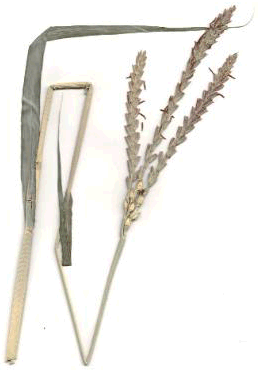
Deciding where to plant NWSG is the first step. Maintaining a mixture of cool and warm season grasses in one pasture or hay field is possible, but care must be taken to avoid giving one a competitive edge. When grown together, particular attention must be given to grazing or harvest height and fertility management, especially the timing of nitrogen fertilizer applications. Managing the two types of grass in separate fields is less complicated.
Controlling competition from other plants is critical for successful NWSG establishment. A minimum of two herbicide applications is recommended when renovating established cool season grass sod. It is difficult to eliminate all existing plants with a single herbicide application, and once the sod is killed, weed seeds which had been suppressed by the sod, will have an opportunity to germinate. Using the spray-smother-spray method is an effective technique for sod renovation.
When using this method, spray the sod with a non-selective herbicide in spring. Plant an annual crop like pearl millet or sorghum-sudangrass as a smother crop. At the end of the growing season, apply herbicide if any escaped grasses or other weeds are present. A winter annual (e.g. cereal rye, triticale, wheat) can be planted if fall and early spring forage is needed. The following spring, spray the area two to three weeks prior to planting to reduce competition from plants with established root systems. Always read and follow label directions when applying herbicides.
Select NWSG species which are well suited for the site and for the planned management system. Plant when soil temperatures reach 60- to 65-degrees Fahrenheit. Some NWSG seeds are fluffy with long awns. The most effective way to achieve good seed to soil contact is to plant seed which has been cleaned to remove the awns or use a no-till drill with NWSG boxes. Most NWSG should be planted no deeper than one quarter inch, so a firm seedbed is crucial. The seed of eastern gamagrass is much larger and should be planted at a depth of one inch using a corn planter.
Controlling competition from weeds is critical during the establishment year. Prevent weeds from growing taller than the seedlings to ensure adequate sunlight is available. Some herbicides cannot be applied until the NWSG seedlings reach a minimum height making it necessary to mechanically remove weeds. Take care not to clip the seedlings shorter than eight inches and remove the thatch if it impedes light penetration into the canopy.
Native warm season grasses can be productive in fields with low soil fertility; however, moderate phosphorus and potassium levels and a soil pH above 5.5 will increase the odds of successful stand establishment by improving seedling vigor. Do not apply nitrogen fertilizer at establishment. Seedlings are slow to establish and nitrogen fertilizer increases weed competition.
During the establishment year, the stand should not be grazed or harvested for hay. By the second growing season, well established stands can be grazed lightly. Graze early in the season and avoid grazing the plants below eight inches in height. Do not graze when soil conditions are wet.
With diligent weed control before establishment and during the first year of growth, prudent fertility management and maintaining adequate residual plant height, NWSG stands can be utilized the year after planting. For more information about establishing NWSG contact an MU Extension Field Specialist in Agronomy.
Source: Valerie Tate, Field Specialist in Agronomy
This Month in Ag Connection | Ag Connection - Other Issues Online
Producers participating in the Show-Me-Select (SMS) heifer Replacement program continue to supply high-quality females. Heifers are developed under strict program guidelines to ensure the animals meet standards for reproductive performance, health, and overall management.
Each year, fall-calving heifers are marketed through the Central Missouri Show-Me-Select Sale held at South Central Regional Stockyards in Vienna, Missouri. This sale provides buyers with the opportunity to purchase bred heifers that have been carefully selected, developed, and verified through the program.
The Central Missouri Show-Me-Select sale on May 8, 2026, included nine consignors marketing 39 lots of fall-calving bred heifers, totaling 82 head and generating $408,600 in gross sales, with an overall average of $4,982 per head. Buyer participation was strong, with 45 registered buyers and 21 actively making purchases in person and online through DV Auction. Prices ranged from $4,200 to $5,850.
Artificial insemination bred heifers totaled 27 head and averaged $5,222 per head. These heifers brought the highest prices, reaching a top of $5,850 and maintaining a minimum of $4,750. Natural service heifers made up much of the offering with 55 head averaging $4,865 per head, with prices ranging from $4,200 to $5,550.
Artificial insemination bred heifers continued to lead the market with higher averages, while natural service heifers offered volume and value within a slightly lower price range. Overall, the sale reflected a steady market with solid buyer demand.
Sire selection within the SMS program follows strict guidelines to ensure genetic merit across all heifers marketed. Eligible sires must have a known identification, be registered with the respective national breed association, and have genomically enhanced Expected Progeny Differences (EPD). Sires are evaluated based on the EPD data published by the breed registry. Artificial insemination sires are required to meet minimum accuracy thresholds for calving ease. In addition, all sires must meet calving ease EPD requirements. Natural service sires are also held to high standards and must have genomic enhanced EPDs, ensuring both breeding methods provide dependable, data driven genetic value.
Following breeding, all heifers are pregnancy-checked within the required timeframe, and only those meeting SMS standards are eligible for the sale. Throughout gestation, proper nutrition and health management remain a priority to ensure both heifer and calf performance. As calving approaches in the fall, heifers are closely monitored, and detailed records including calving ease, birth weights, and calf vigor are voluntarily reported from the buyer to the program.
The statewide Show-Me-Select Program continues to serve as a trusted marketplace, offering spring and fall-calving heifers. Buyers can confidently invest in females supported by verified management practices and complete performance records, contributing to long-term herd success.
For more information or interest in participating in the Central Missouri Show-Me-Select spring sale, please contact the SMS Central Regional Coordinator Chrisee Brandl at chriseebrandl@missouri.edu or 660-651-2172.
Source: Chrisee Brandl, Field Specialist in Livestock
Northeast Missouri Show-Me-Select Replacement heifer program held a fall calving heifer sale where 120 heifers averaged $5,457. The sale was held on Saturday, June 6th at F & T Livestock Auction.
The eight producers were enrolled in the University of Missouri Extension's educational heifer management program. The heifers were bred to sires with both calving-ease and growth genetics. The top selling lot was consigned by Beach Cattle Co. and brought $6,450.
Highest consignor average was $5,576 on 25 head from Beach Cattle Co, Leonard, Mo. Other high averaging consignors were Clark Farms, Edina, Mo. $5,520 on twenty head: Mosby Cattle Co., Silex, Mo. $5,500 on six head.
Twenty-four buyers purchased over $650,000 worth of bred heifers: exchanging hands in less than one hour. Calving surveys returned by buyers provide important information which is given back to consignors to guide improvements in future years.
The Show-Me-Select heifer development program takes nearly a year to complete. Pre-breeding exams are completed on heifers usually four to eight weeks before being bred. These exams include a pelvic measurement, reproductive tract score, and weight record. Heifers may be bred artificially or be exposed to natural service, however; the service sires must meet specific calving ease EPD requirements based on breed. This year 42 head, or 35 percent, of the heifers in the sale were synchronized and bred AI averaging $139 over natural service bred heifers.
All heifers must be pregnancy tested within 90 days of breeding by a veterinarian to determine expected calving date. The use of ultrasound has helped many of the veterinarians improve their accuracies on calving dates. During the development period the heifers undergo an extensive health program and are vaccinated at weaning, pre-breeding, and pregnancy examination as well as treated several times for internal and external parasites. Heifers are also screened for blemishes, condition, muscling and structural soundness by MU Extension livestock specialists and Missouri Department of Agriculture graders.
This is the 30th year for the Show-Me-Select heifer sale in Palmyra, over 54,000 heifers have been through the program, and 9,546 head have been sold. If you are interested contact an MU Extension Livestock Specialist.
Source: Daniel Mallory, Field Specialist in Livestock
This Month in Ag Connection | Ag Connection - Other Issues Online
Herbicide spray drift is one of the most frustrating and increasingly common problems facing Missouri gardeners. Whether it comes from roadside spraying, neighboring fields, or lawn-care applications, a small amount of drifting herbicide can cause significant injury to vegetables, flowers, fruit trees, and ornamentals. Missouri's warm, breezy summers only heighten the risk, making awareness and prevention essential for home gardeners.
Spray drift occurs when herbicide droplets or vapors move off-target during or after application. In Missouri, drift typically comes from:
Two types of drift affect gardens:
Many garden plants, especially tomatoes, peppers, grapes, potatoes, and flowering ornamentals, are extremely sensitive to growth-regulator herbicides. Symptoms often appear within days but can continue developing for weeks. Vegetables may survive but produce poorly. Perennials and shrubs may show damage for multiple seasons. Common signs include:
Missouri's agricultural landscape includes millions of acres of corn, soybeans, and pastures which are commonly treated with herbicides. Several factors increase drift risk:
Gardeners in Missouri often report drift injury in June and July when field spraying is active. While gardeners cannot control what happens off other property, steps can be taken to reduce risk and respond effectively.
If drift occurs, document everything - photos, dates, wind direction, symptoms; avoid harvesting from severely damaged plants until safety is confirmed; and suspected drift can be reported to the Missouri Department of Agriculture's Pesticide Program.
Most ornamental plants can recover from mild drift, although distorted growth may persist for the season. Vegetables may rebound if new growth appears normal within a few weeks. Severely damaged plants, especially tomatoes and grapes, may need to be replaced. To support recovery, water deeply to reduce stress, avoid fertilizing immediately which can worsen injury and prune dead or deformed growth once plants stabilize.
Herbicide spray drift is more than a nuisance-it threatens food production, pollinator habitat, and the hard work gardeners invest each season. By understanding the causes, recognizing symptoms, and taking proactive steps, Missouri gardeners can better protect the landscapes and advocate for responsible herbicide use.
Source: Jennifer Schutter, Field Specialist in Horticulture
This Month in Ag Connection | Ag Connection - Other Issues Online
Aug. 6 (7 a.m. - 1 p.m.)- Greenley Memorial Research Farm, near Novelty, MO
Aug. 10 (7:30 a.m.) Fisher Delta Research, Extension and Education Center, Portageville
Sept. 26 (10 a.m.- 3 p.m.) South Farm Showcase, Columbia
Oct. 2 (9 a.m. - 1 p.m.) Producer Field Day at Wurdack Extension and Education Center, Cook Station
More information on all the field days is available at https://tinyurl.com/MU-fielddays2026.
Publishing Information
Ag Connection is published monthly for Northeast and Central areas of Missouri producers and is supported by the University of Missouri Extension, the Missouri Agricultural Experiment Station, and the MU College of Agriculture, Food and Natural Resources. Managing Editor: Mary Sobba.
Send comments and suggestions to:
Mary Sobba, Agriculture Business Specialist
101 N. Jefferson St., Rm 304
Mexico, MO 65265
(573) 581-3231
sobbam@missouri.edu